
Washington County Bench Warrants
Washington County bench warrants are issued when someone fails to appear in court or does not comply with a court order. The Circuit Clerk in Chatom maintains all court records. Washington County is part of the 1st Judicial Circuit. This rural county has a public access computer available for court record searches, which is unusual for small counties.
Washington County Quick Facts
Public Access Computer Available
Washington County offers a public access computer at the courthouse. This is rare for a small county. You can search court records yourself without asking staff to do it for you.
The public computer is in the clerk office area. You can look up case information and check for warrants. Staff can help if you have questions. This service is free to use during office hours.
Not everyone has internet at home. This public computer helps residents access court records. It is one of the few rural Alabama counties that offers this.
What Is a Bench Warrant in Washington County?
A bench warrant is a court order for arrest. It comes from the judge's bench. When you miss a court date or break a court order, the judge can issue one. This differs from an arrest warrant. An arrest warrant is for a new crime. A bench warrant is for not following court rules.
Washington County Circuit Court handles felony cases. District Court handles misdemeanors and traffic matters. Both can issue bench warrants. Once issued, the warrant goes into the statewide system.
Under Code of Alabama § 15-10-60, a bench warrant directs officers to arrest the person and bring them to court. Felony bench warrants never expire. They stay active until served or recalled. Misdemeanor warrants may last 180 days to one year.
Washington County has historical significance. St. Stephens was the first territorial capital of Alabama before Montgomery. Today, the county is rural with a small population. But the court system operates the same as larger counties.
Washington County Circuit Clerk
The Circuit Clerk keeps all court records. This includes bench warrants. The current Circuit Clerk was a former court reporter before taking this role. Staff can search for warrants and provide copies.
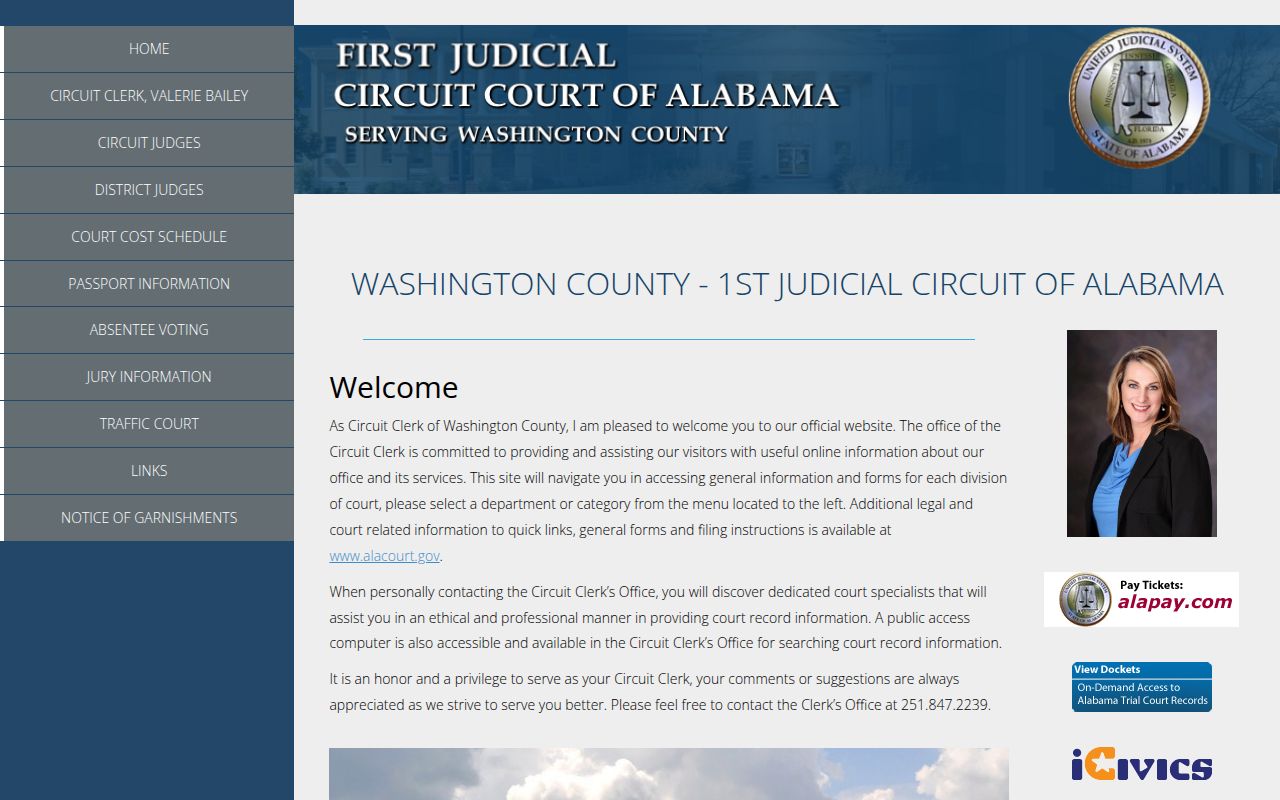
| Circuit Clerk | Valerie Knapp |
|---|---|
| Address |
45 Court Street Chatom, AL 36518 |
| Phone | (251) 847-2239 |
| Hours | Monday through Friday, 8:00 AM to 4:30 PM |
The clerk office is in the Washington County courthouse in downtown Chatom. Parking is free on the street. The public access computer is available during business hours.
Washington County Sheriff's Office
The Sheriff keeps copies of active warrants. You can call to check if a warrant exists. The Sheriff's office serves warrants and makes arrests throughout the county.
| Address |
Washington County Sheriff's Office Chatom, AL 36518 |
|---|---|
| Phone | (251) 847-3255 |
Washington County is large in area but small in population. The Sheriff's office covers a lot of ground. They can tell you about active warrants over the phone.
How to Search Washington County Bench Warrants
You can search for bench warrants in Washington County several ways. The public access computer makes in-person searches easier.
Use the Public Computer: Visit the clerk office and use the public access computer. Search court records yourself. This is free during business hours.
Call the Sheriff: Call (251) 847-3255 and ask if a warrant exists. Have the full name and date of birth ready. This is free.
Call the Circuit Clerk: The clerk at (251) 847-2239 can check court records. They can tell you about warrants and case details.
Alacourt Access: Search court records at pa.alacourt.com. A name search costs $9.99. This shows case details and bench warrants.
Visit in Person: Go to the Circuit Clerk at 45 Court Street in Chatom. Bring valid ID. Staff can search and print copies.
ALEA Background Check: For a full criminal history, request a check from the Alabama Law Enforcement Agency. This costs $25.
How to Clear a Bench Warrant in Washington County
If you have a bench warrant in Washington County, you need to handle it. The warrant will not go away on its own. It stays active until you deal with it or police arrest you.
Hiring a lawyer is the safest way. A lawyer can file a motion to recall the warrant and request a new court date. They can appear for you before you turn in.
You can turn yourself in. Go to the Washington County Jail or courthouse during business hours. Bring your ID. Tell staff about the warrant. A judge will decide on bail.
Under Code of Alabama § 36-12-40, bench warrant records are public. Employers and landlords can check. An active warrant hurts your job and housing prospects.
If you owe fines, you may need to pay those too. Ask the clerk what you owe. Payment plans may be available.
Washington County Bench Warrant Fees
Fees apply when you search records or handle your case. The Sheriff's phone check and public computer are free.
- Public access computer: Free
- Sheriff phone check: Free
- Alacourt name search: $9.99
- Alacourt document images: $5.00 for first 20 pages
- Copy fees: $0.50 to $1.00 per page
- Certified copies: $5.00 and up
- ALEA background check: $25.00
Court costs and fines vary by case. Failure to appear adds extra fees. Ask the clerk for a full accounting.
Alabama State Court Resources
Washington County is part of Alabama's unified court system. These state resources can help you.
Alabama Administrative Office of Courts: The AOC runs the Alacourt system. Visit alacourt.gov for forms and info.
Alabama eForms: Get court forms at eforms.alacourt.gov.
AlaPay: Pay fines online at alapay.com. You need your case number.
ALEA: The Alabama Law Enforcement Agency handles background checks. Call (334) 676-7700.
Legal Help in Washington County
If you cannot afford a lawyer, legal aid may help. These groups serve Washington County residents.
Legal Services Alabama: Free legal help for those who qualify. Call (251) 433-6560 or toll-free (866) 456-4995.
Alabama State Bar Lawyer Referral: Get connected to a local lawyer. Call (800) 392-5660.
Nearby Counties
These counties border Washington County. Check where your offense occurred to know which county handles your case.